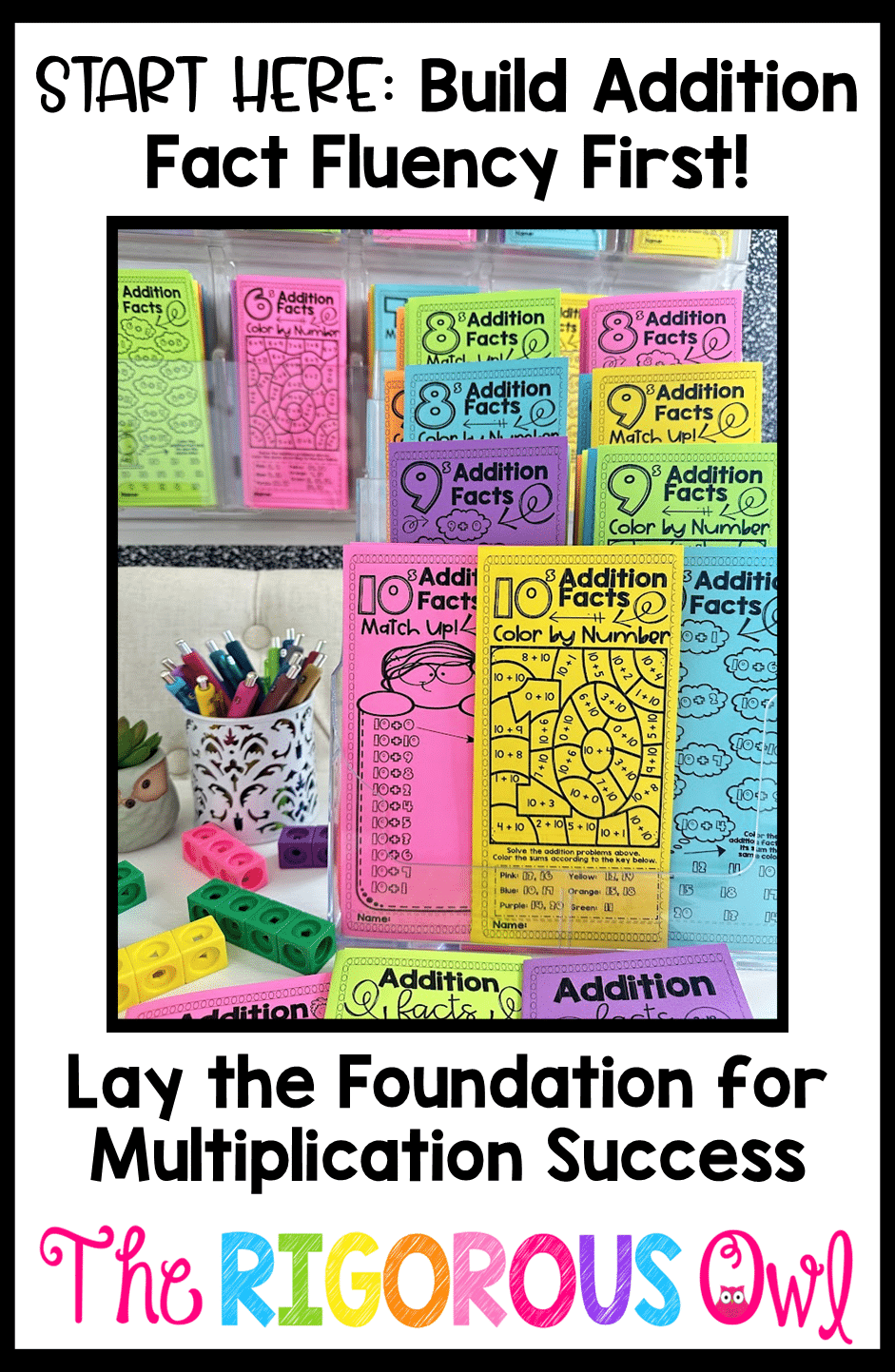
Hey teachers, we know you’ve got multiplication on your mind! Probably because in third grade that's when math really starts to pick up steam. Before you dive into fact families and anchor charts, let's ask: are your students fluent in addition? Shaky addition skills can quietly hold kids back when it comes to multiplication. If you're watching your students struggle, the issue might not be multiplication, but more addition based. Let’s take a closer look at why addition fact fluency is the foundation your 3rd graders need for math success.
The Connection Between Addition and Multiplication

It’s easy to think of addition and multiplication as two totally separate skills, but they’re very connected! At its core, multiplication is repeated addition. If kids don’t have solid addition skills things can get messy fast! When kids are fluent in addition facts, they can more easily recognize patterns, make mental jumps, and trust the math. Without it, multiplication turns into guessing.
How Addition Strategies Support Multiplication Strategies
So many of the strategies we want students to use in multiplication are actually rooted in addition. Think about skip counting—it's just adding the same number over and over. Doubling facts? Also addition. Even the more advanced strategies like using near doubles or making a ten rely on students being quick and confident with their addition facts. When addition fluency is strong, strategies become tools.

4 Red Flags That Show Students Need Addition Fluency Before Multiplication

We as teachers know when kids are struggling, but sometimes it's hard to pinpoint exactly why. Did you know there are red flags that you can use to spot when students need more addition practice? We have found that when you see one or more of these 4 red flags in your mathematician, students really need to be working on addition, before they can magically multiply.
1. They slow down or stall during skip counting.
What should be a quick pattern turns into hesitation—or a complete pause.
2. They struggle with facts like 6 × 4—not because of multiplication, but because repeated addition is exhausting.
If 6 + 6 + 6 + 6 takes too long, the multiplication fact won’t be retained.
3. Simple addition errors show up while solving multiplication problems.
You’ll spot little mistakes that throw off the whole equation.
4. Strategies like repeated addition or doubling feel “too hard.”
When addition isn’t fluent, these multiplication strategies become overwhelming.
A lot of students start 3rd grade without fully mastering their addition facts—and it shows. When we stop practicing addition too early, those small gaps quickly grow into bigger struggles, especially once multiplication kicks in. Addition isn’t just an early math skill; it’s something students rely on for mental math well beyond the classroom.

An Easy Way to Build Both – Your Math Fact Brochure Bundle
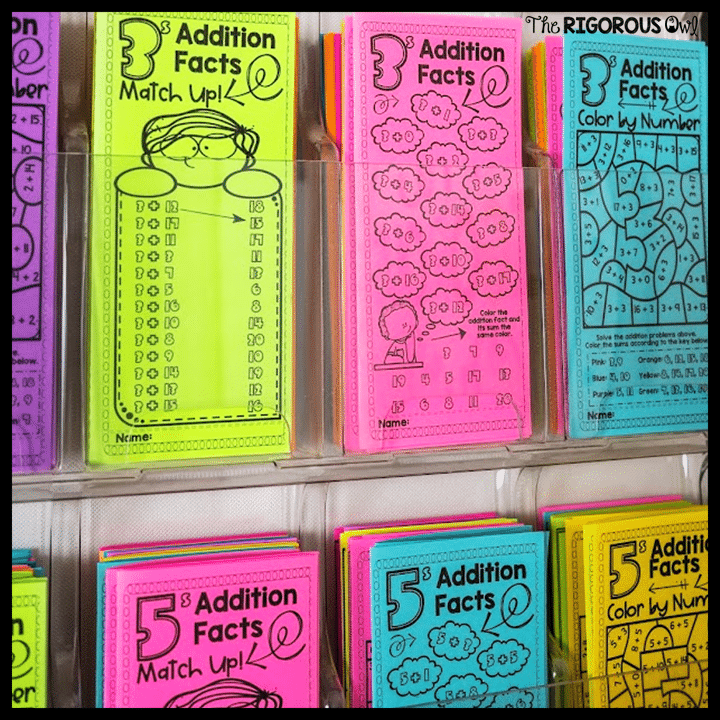
If you’re looking for an easy, low-prep way to strengthen both addition and multiplication fluency, the Addition Brochure Bundle is the perfect place to start. These tri-fold brochures break practice into fun, manageable pieces that feel more like puzzles than worksheets. That way students stay engaged while building skills. Each brochure targets a specific fact family or strategy, helping kids develop confidence and fluency one step at a time.
(And if you're already using the Multiplication Brochures in your classroom, you’ll love how seamlessly the addition set fits right in. Together, they create a complete, strategy-based system for mastering math facts that builds a solid foundation and grows with your learners all year long.)
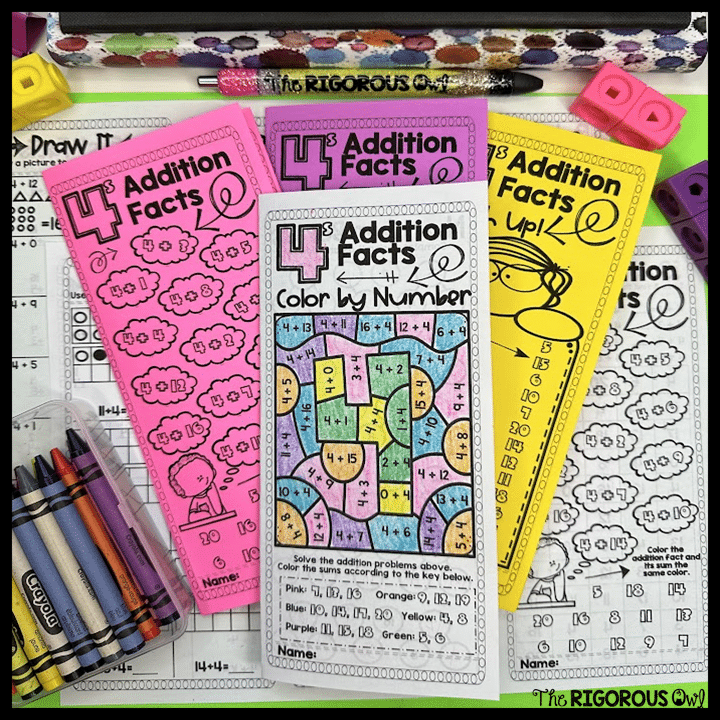
Addition is more than just a stepping stone—it’s a bridge to mulitplication to ensure achieve multiplication mastery. When students have strong addition fluency, they’re better equipped to tackle multiplication with confidence and accuracy. Don’t skip this important step.
Grab the Addition Brochure Bundle today and give your students the foundation they need for real math success.

Looking to Read More About Multiplication? Check Out Our Related Blog HERE: