Teaching figurative language doesn’t have to feel like pulling teeth! On the contrary, it can be a fun and rewarding experience for both you and your students. If you’re ready to take the next step toward making your lessons more engaging, interactive, and effective, you’re in the right place.
In this post, we’ll first explore the different types of figurative language. Next, we’ll look at why they’re important for developing strong reading and writing skills. Then, we’ll share practical strategies for teaching them in ways your students will actually enjoy. (And as a bonus, we’ve thrown in some freebies, resources, and blog links to make your planning even easier!)
Why Teach Figurative Language?
Understanding figurative language helps students become stronger readers and more creative writers. After they understand these ideas, they can add color to their writing and make sense of literary texts. For many students these concepts can feel confusing. That’s where fun, hands-on strategies come in!
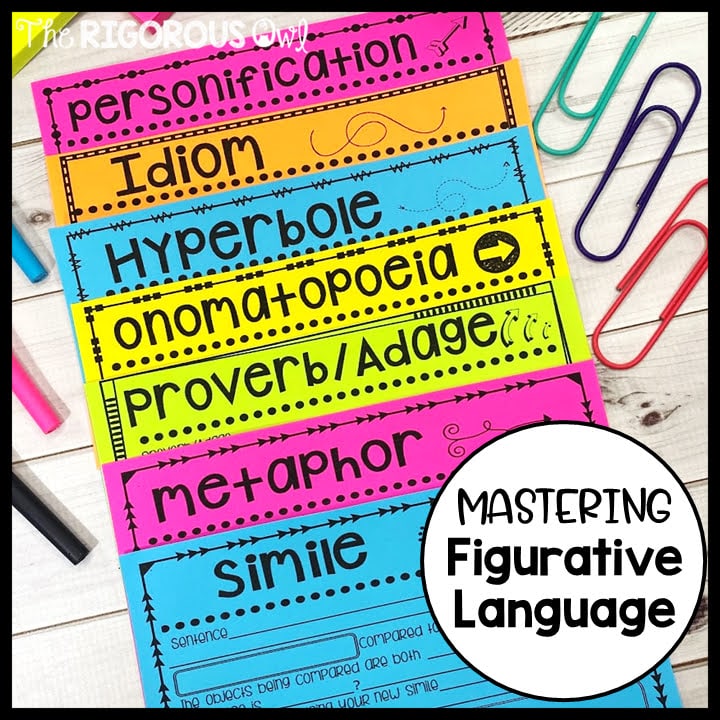
Figurative Language Types (and How to Make Them Fun!)
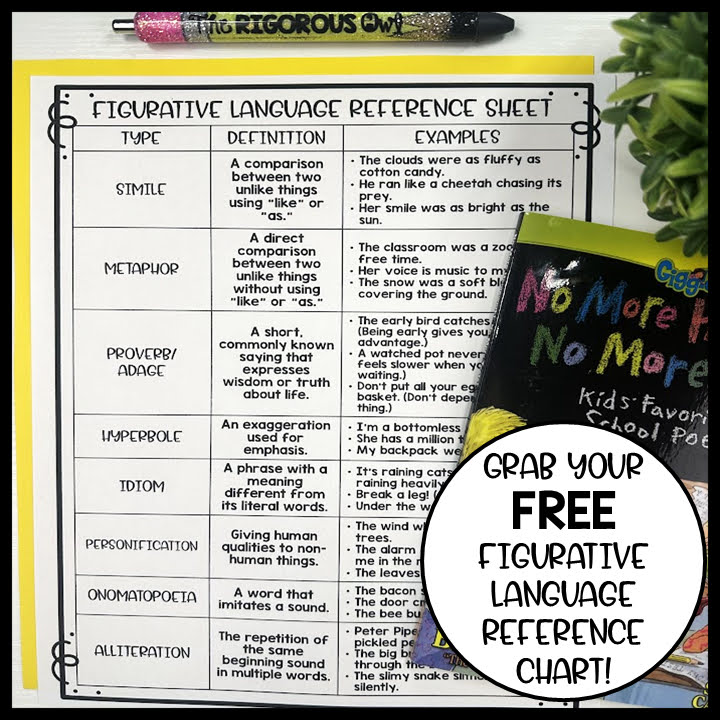
Don't feel like you have to memorize all of these types! We have a Figurative Language Reference Sheet Freebie to keep as a cheat sheet!
Put Figurative Language into Action
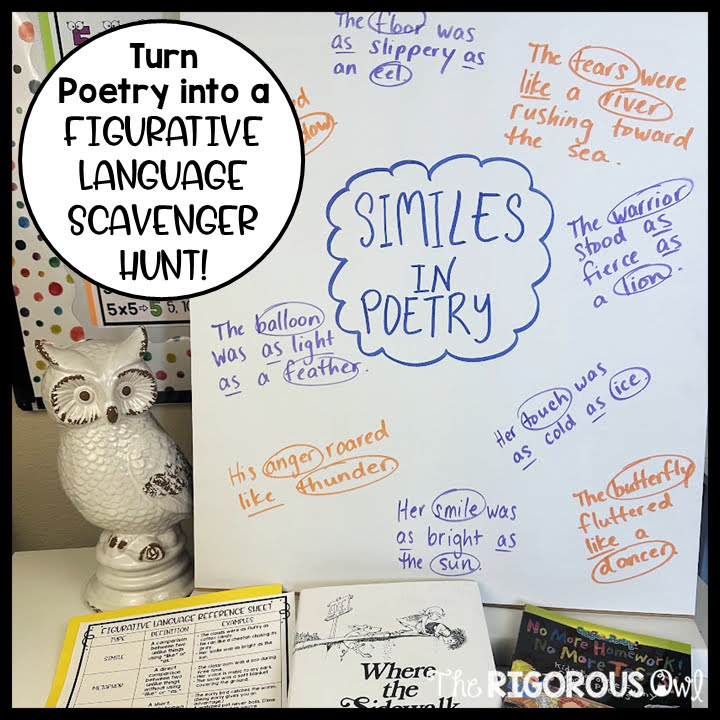
After the types of figurative language have been taught, the next step is to start identifying them in real reading. One of our favorite ways to hit two standards at once is by teaching poetry while also having your students identify the figurative language within! Plus, we have plenty of ideas to help you implement these strategies with ease.
Now That Students Know Figurative Language...
Here at The Rigorous Owl, we are huge advocates of having students review the standards even after we teach them. As educators, we know that sometimes those standards just don’t stick! We can’t count how many times we’ve taught something, felt great about it, and then revisited it a month later—only to be met with those dreaded blank stares.
So, we figure if we can embed a quick 5–10-minute activity as a bellringer, it will totally pay off all year long!
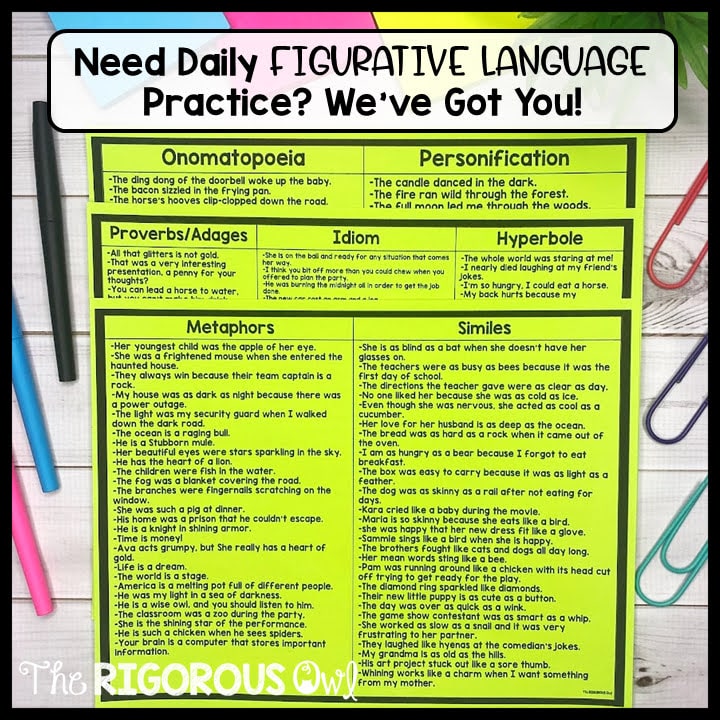
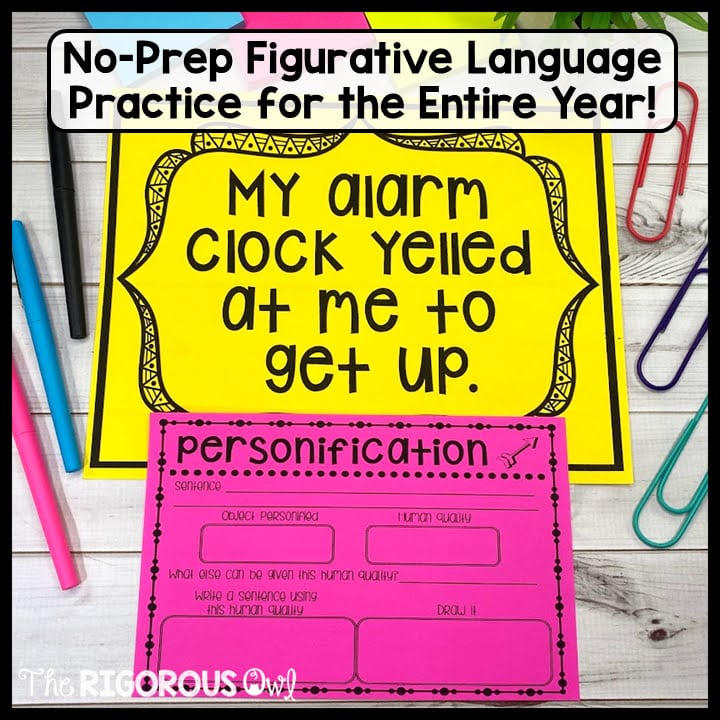
That’s exactly why we’ve planned 180 Days of Figurative Language activities with resource posters and graphic organizers included! Students get a new example of figurative language each day and quickly fill out a graphic organizer in their booklets. This is such an easy and quick way to keep those standards fresh!
Ever Wish Your Curriculum Dove Deeper into Figurative Language?
If you're anything like us, you have seen the figurative language lessons in your reading curriculum and you know that something is lacking. Where's the meat and potatoes of the lesson? Superficial lessons do nothing for our students! We needed more and we know you do too! There needed to be lessons that went in deeper, so we started creating our own vocabulary lessons and wow... we noticed the difference!
If this is where you're at, be sure to check out our YEAR LONG Vocab Lessons and Practice Bundle for grades 3-5. We even made digital task cards to support each lesson! Using these as centers throughout the year is something we love, and we know you will too.
And Now for the Grand Finale- Poetry Smackdown!
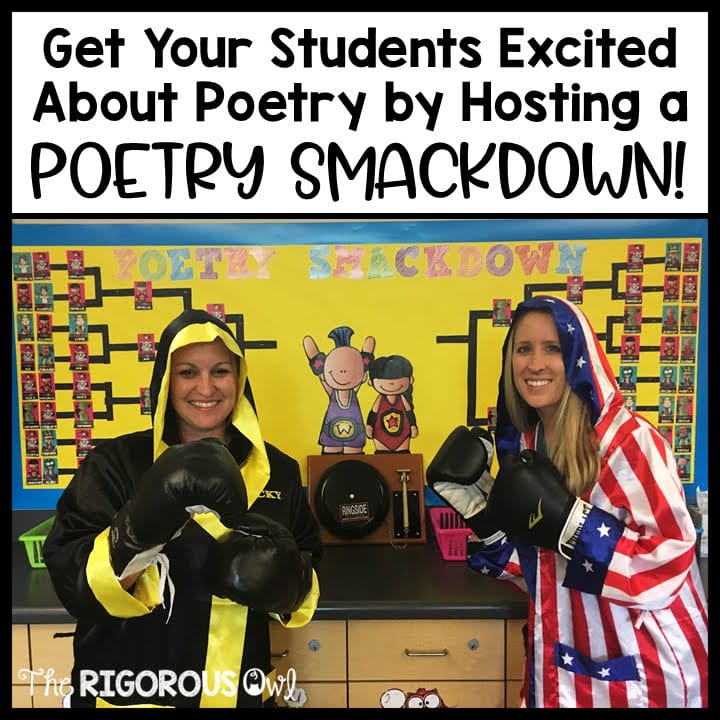
Last steps in the figurative fun! You've taught the figurative language; students have learned to spot it in writing and poetry- and now it's time for the FUN!
Looking for a culminating activity to end your poetry month? Poetry Smackdown is your answer! Students get to perform a poem and compete to make it to the final round. This will be one of the events your students will always remember!
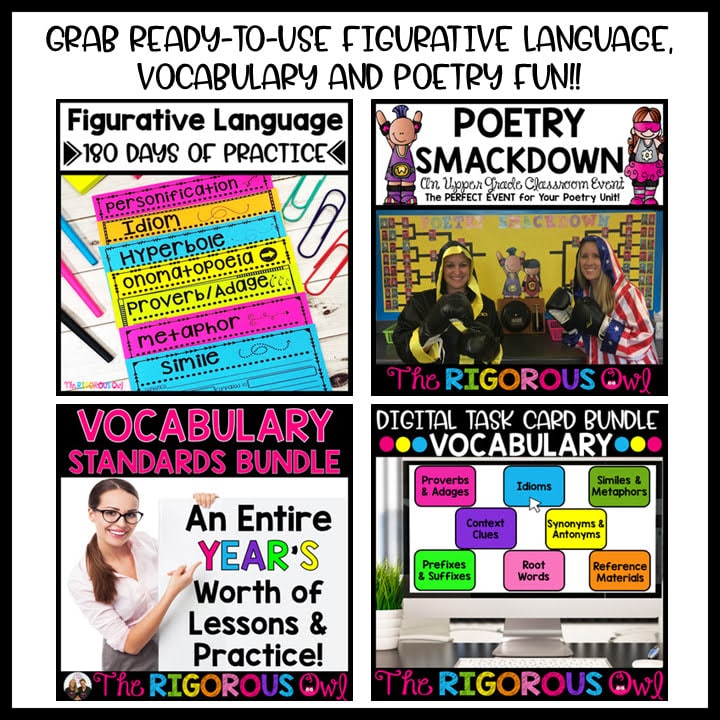
Click Below to Grab Our
Figurative Language Resources!